
Firefighter Technology as of 2026: What Departments Should Know
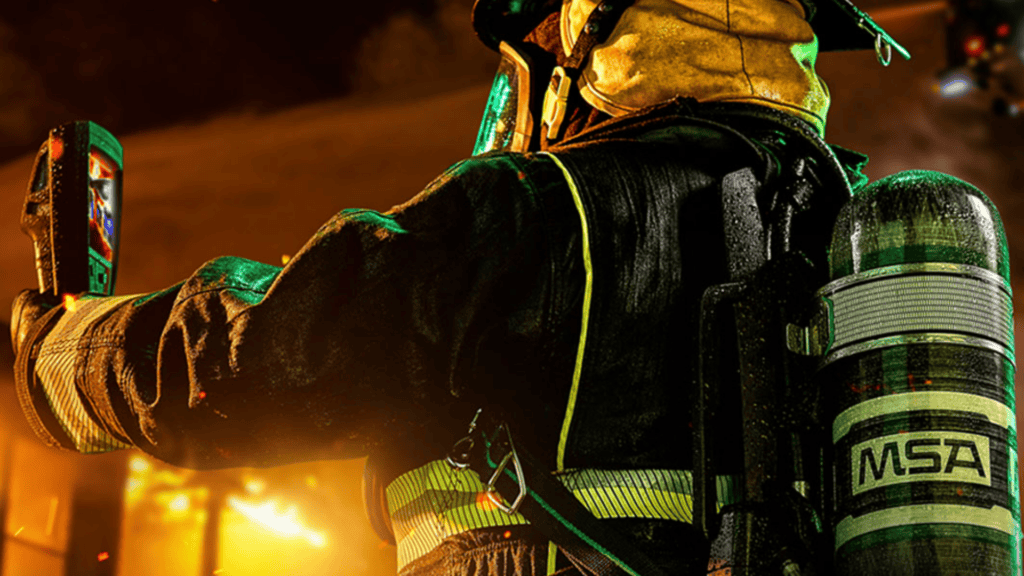
Connected firefighter technology in 2026 has been a growing topic at apparatus bays and budget meetings alike. For departments evaluating what comes next in PPE and operational tools, the conversation often comes back to one platform: MSA’s Connected Firefighter ecosystem. This blog breaks down what that platform includes, how each component works, and what Ohio departments should think through before committing to an investment.
What Is the Connected Firefighter Platform?
MSA’s Connected Firefighter platform is a suite of tools designed to keep firefighters, incident command, and department leadership better informed in real time. Rather than treating SCBA, communications, and data management as separate problems with separate solutions, the platform integrates them into a single ecosystem where devices share data automatically.
The platform centers on four primary components: the G1 SCBA XR Edition, the LUNAR Connected Device, the MSA Hub, and FireGrid software. Departments can adopt pieces of the system incrementally, or go all-in for the fullest picture of on-scene accountability. Either way, the underlying goal is the same: give every member of the fireground, from the interior crew to command, more actionable information at the moment decisions get made.
The MSA G1 SCBA XR Edition: More than an Air Delivery System
The MSA G1 SCBA XR Edition is the foundation of the connected platform. Firefighters can monitor air pressure, estimated time remaining, and battery life directly on the G1 control module, or on the LUNAR screen when the two are paired. That pairing also makes SCBA data, including air status and alarm information, available to incident command in real time, so the IC is never guessing about who has how much air left.
Communication features are built into the unit without adding weight or complexity to the facepiece. An integrated, noise-canceling voice amplifier eliminates the interference and inhalation noise that makes radio communications difficult in a working fire. Bluetooth connectivity to radios comes standard, with no additional hardware required on the facepiece itself.
LUNAR Connected Device: Search, Rescue, and Situational Awareness
LUNAR is a purpose-built connected device that goes well beyond providing a display for G1 data. It delivers enhanced connectivity, search and rescue technology, and situational awareness capabilities that function both on and off scene via LTE-M connectivity.
On the fireground, LUNAR’s personal thermal imaging improves low-visibility navigation and goes further by aiding in identifying hot spots and ventilation points through edge detection. Its Firefighting Assisting Search Technology, known as F.A.S.T., automatically notifies team members and incident command when a LUNAR unit goes into alarm. When a search is activated, LUNAR provides direction and distance information combined with thermal imaging to help crews locate separated members faster.
LUNAR also has embedded GPS technology that displays the approximate current location of each unit on a map, and retains a last-known location if the GPS signal is lost. For mutual aid responses, LUNAR builds a self-forming ad hoc network, an always-on connection between all active LUNAR devices in the network, regardless of which department they belong to. MSA worked with AT&T to make LUNAR available on FirstNet, which prioritizes first responder communication over commercial traffic.
FireGrid: Cloud-Connected Software for On-Scene and Off-Scene Management
FireGrid is the software layer that makes the platform’s data useful. It is a suite of applications spanning cloud, tablet, and mobile, and it works both on the fireground and back at the station.
On scene, FireGrid gives incident command a live view of firefighter status. From the moment a crew member deploys, the IC can see real-time data on air supply, alarm status, and personnel location. This information aggregates automatically from connected devices, which reduces the cognitive load on command during a fast-moving incident. When a mayday is declared, having clear data on where personnel are and how much air they have can make a measurable difference in the speed and accuracy of the rescue response.
When the incident ends, FireGrid automatically generates a report and retains it in the cloud. That report details who was on scene, what products and devices were used, and what incidents occurred, covering data from both LUNAR and G1 plus Hub. FireGrid Inventory Management also retains historical records of which incidents specific SCBA units attended, which directly supports the kind of data retention and fleet tracking that NFPA compliance demands. For departments that have dealt with the administrative overhead of maintaining those records manually, this is a meaningful operational benefit.
MSA Hub: The Wireless Getaway to the Cloud
The MSA Hub rounds out the Connected Firefighter Platform by providing a wireless gateway to the cloud for local and remote monitoring of live incident events. It creates its own hotspot, enabling connectivity without relying on existing infrastructure at the incident site. That matters for departments operating in areas where cellular coverage or Wi-Fi cannot be counted on.
When the Hub is deployed, incident command is no longer required to stay tethered to the command vehicle to monitor personnel data. Officers can be closer to the action while still receiving the same real-time information. For remote monitoring, department leadership or safety officers can observe active incident data from anywhere with connectivity, which supports both accountability and post-incident review.
Cloud-based technology helps departments collect, understand, and store data flowing from multiple devices and applications. Beyond on-scene monitoring, that data supports understanding of bigger-picture trends, opportunities, and risks that inform longer-term operational decisions.
What Departments Should Consider Before Investing
No technology investment is purely a gear decision. Before Ohio departments begin the evaluation process for connected firefighter systems, there are practical questions worth working through.
Training and Adoption
The technology is built to integrate with established tactics rather than replace them, but crews need time with the equipment to understand what data they are seeing and how to act on it. Incident commanders in particular benefit from hands-on experience with FireGrid Monitor before they are expected to use it in a working incident.
Flexible Scalability
The modular nature of the platform is an advantage for departments working within budget constraints. Departments do not need to commit to the entire ecosystem at once. A department that already runs G1 SCBA can add LUNAR units or the Hub on its own timeline. Departments not currently using MSA breathing apparatus can still incorporate LUNAR and FireGrid tools independently, since those components function outside of MSA SCBA.
Job Site Connectivity
Connectivity at the incident site is worth evaluating early. The Hub creates its own hotspot, which addresses many coverage concerns. LUNAR’s LTE-M connectivity and FirstNet compatibility, made possible through MSA’s partnership with AT&T, provide additional options for departments operating in remote areas or large structures where coverage can be unpredictable.
Understanding Unique Department Gaps
Finally, departments should take stock of what problems they are actually trying to solve. Connected technology is most valuable when it addresses specific gaps in accountability, air management, or communication that a department already knows it has. Going in with that clarity makes it easier to evaluate which components deliver the most immediate return and how to build out from there.
How FSS Fits In
Fire Safety Services works with Ohio departments on PPE and equipment decisions across all levels of complexity. When it comes to connected firefighter technology, the value of working with a knowledgeable distributor is not just in placing an order. It is in having someone who can walk through your department’s specific setup, answer questions about compatibility and training, and help you build a realistic rollout plan that fits your operational and budget reality.
We can also facilitate demos of MSA equipment so your chiefs and safety officers can evaluate the G1 XR, FireGrid Monitor, and the Hub firsthand before any purchasing decision is made.
Curious whether connected firefighter technology is right for your department? Contact FSS to schedule a demo or talk through your options. Our team is ready to help you evaluate what makes sense for your crews and your community.